Douglas DC-3 Airplane Model
Douglas DC-3 Airplane Model
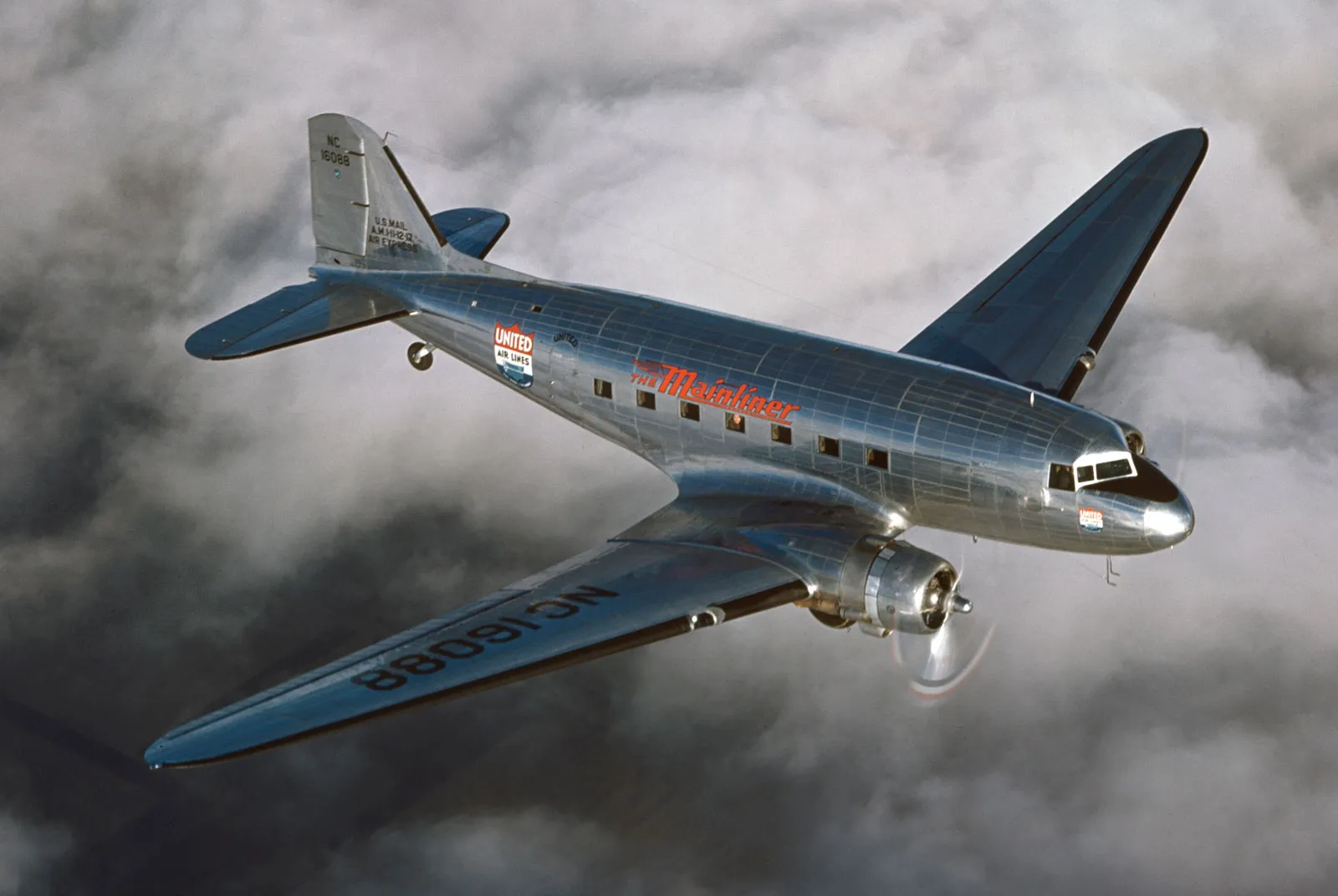
Main Reference Image - Britannica
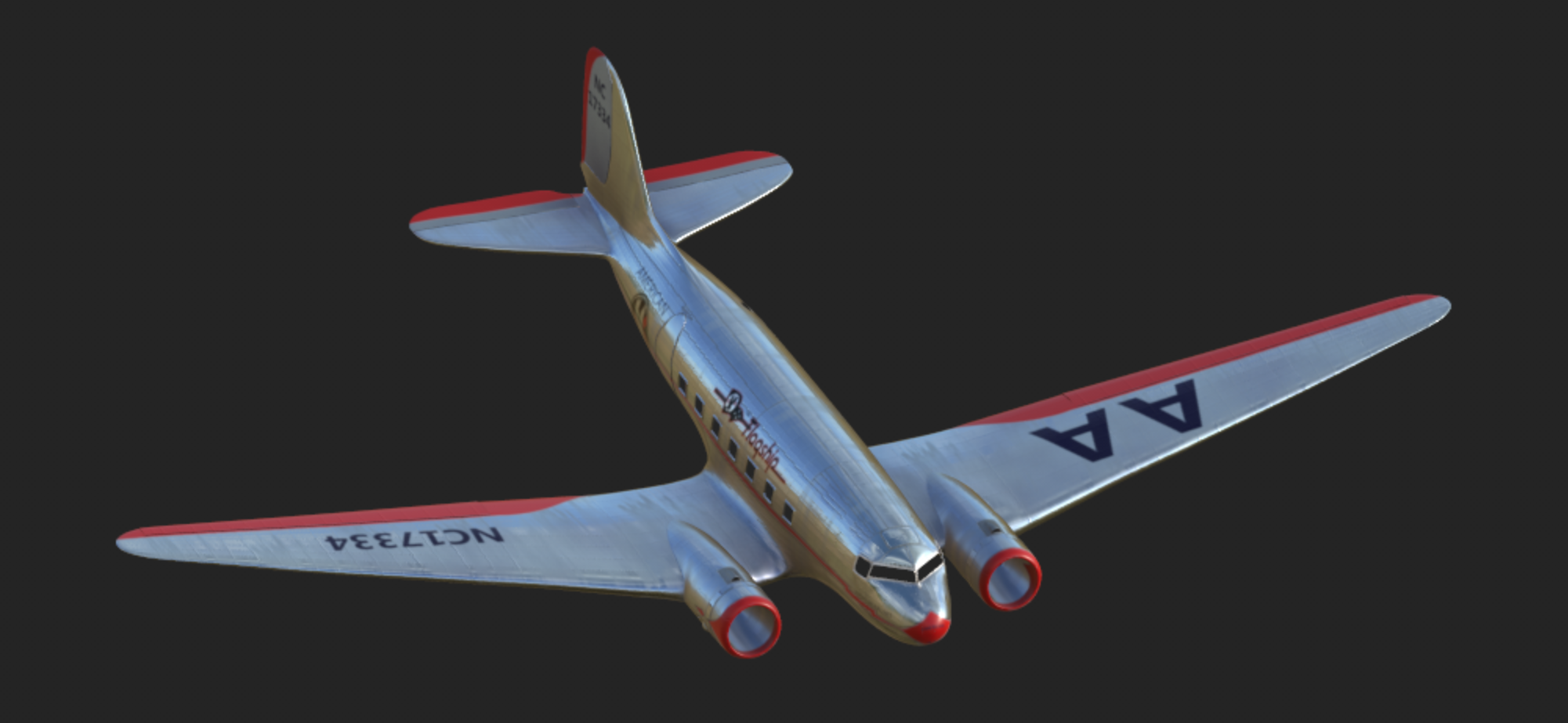
Final Still Render
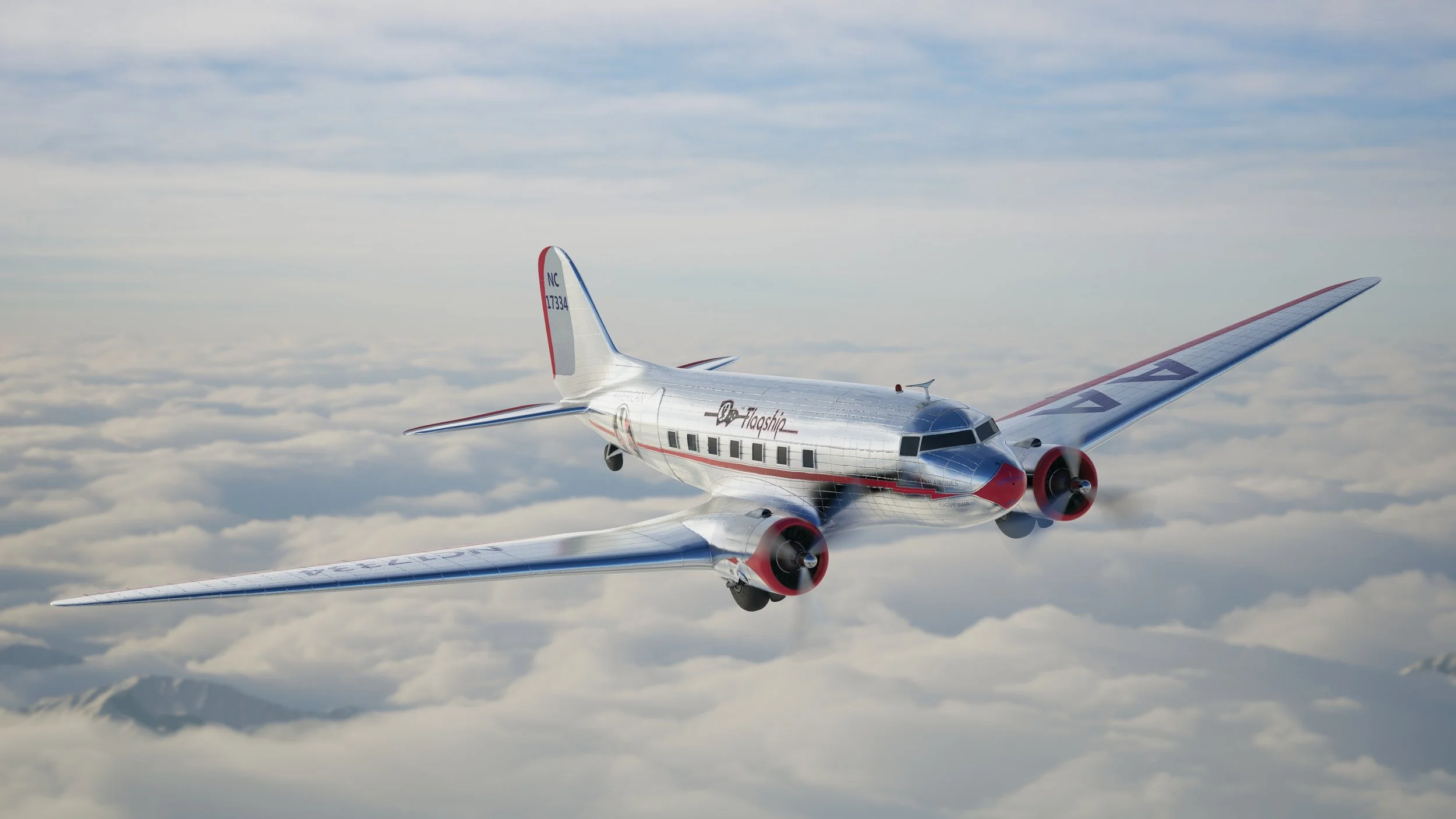
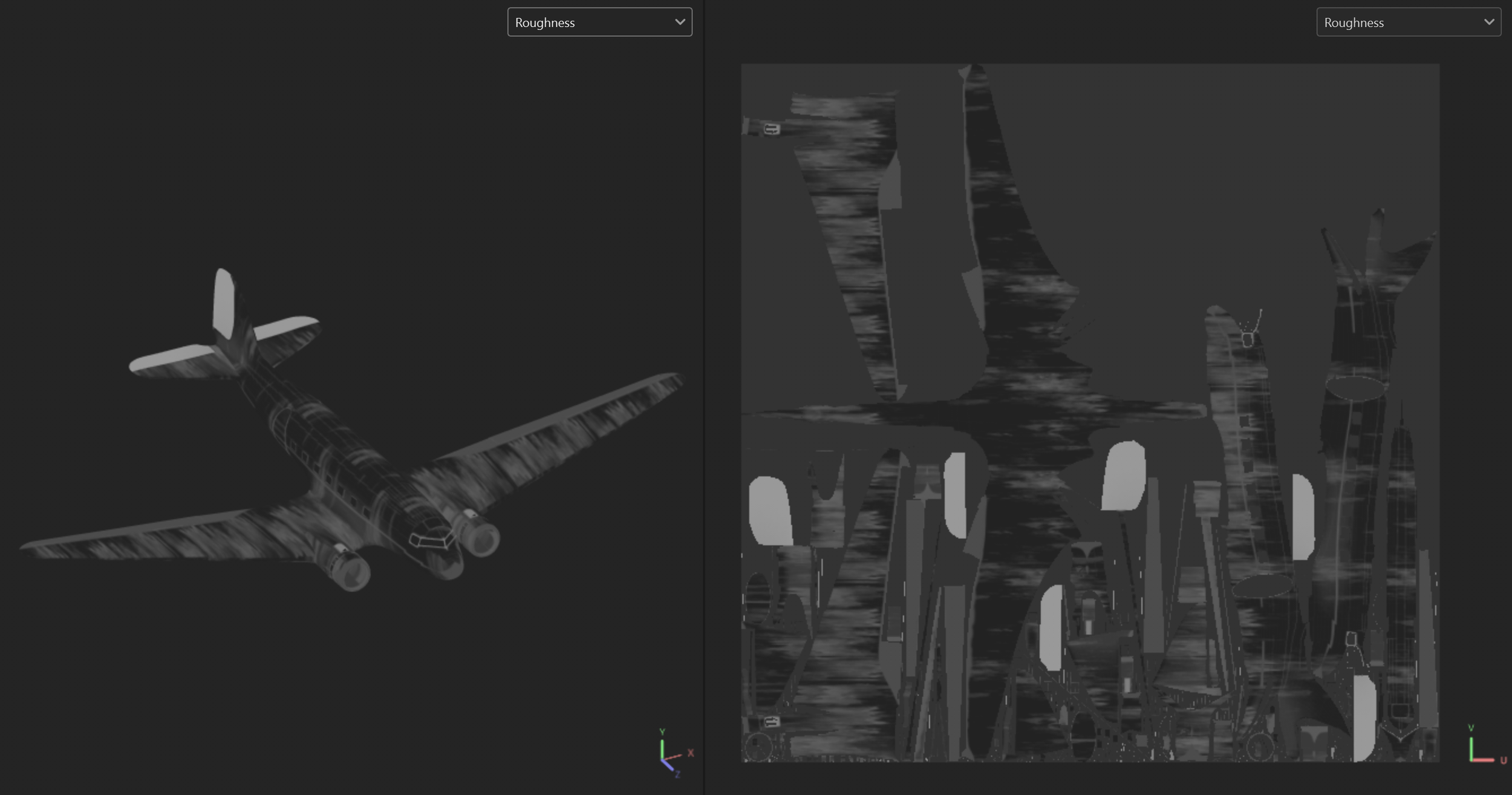
There are still a couple of things I would like to do to make this project better, such as improving the details especially in the roughness map of the material, rendering a moving sequence of the plane, and adjusting the color of the plane’s metal.
This quarter, in my Modeling for VFX class, our first project is to model a vehicle (approved by Professor Kirt Witte). My chosen vehicle is the Douglas DC-3 Airplane. Created in the 1930s, the DC-3 revolutionized air travel by enabling nonstop, affordable transcontinental flights.
Process Blog
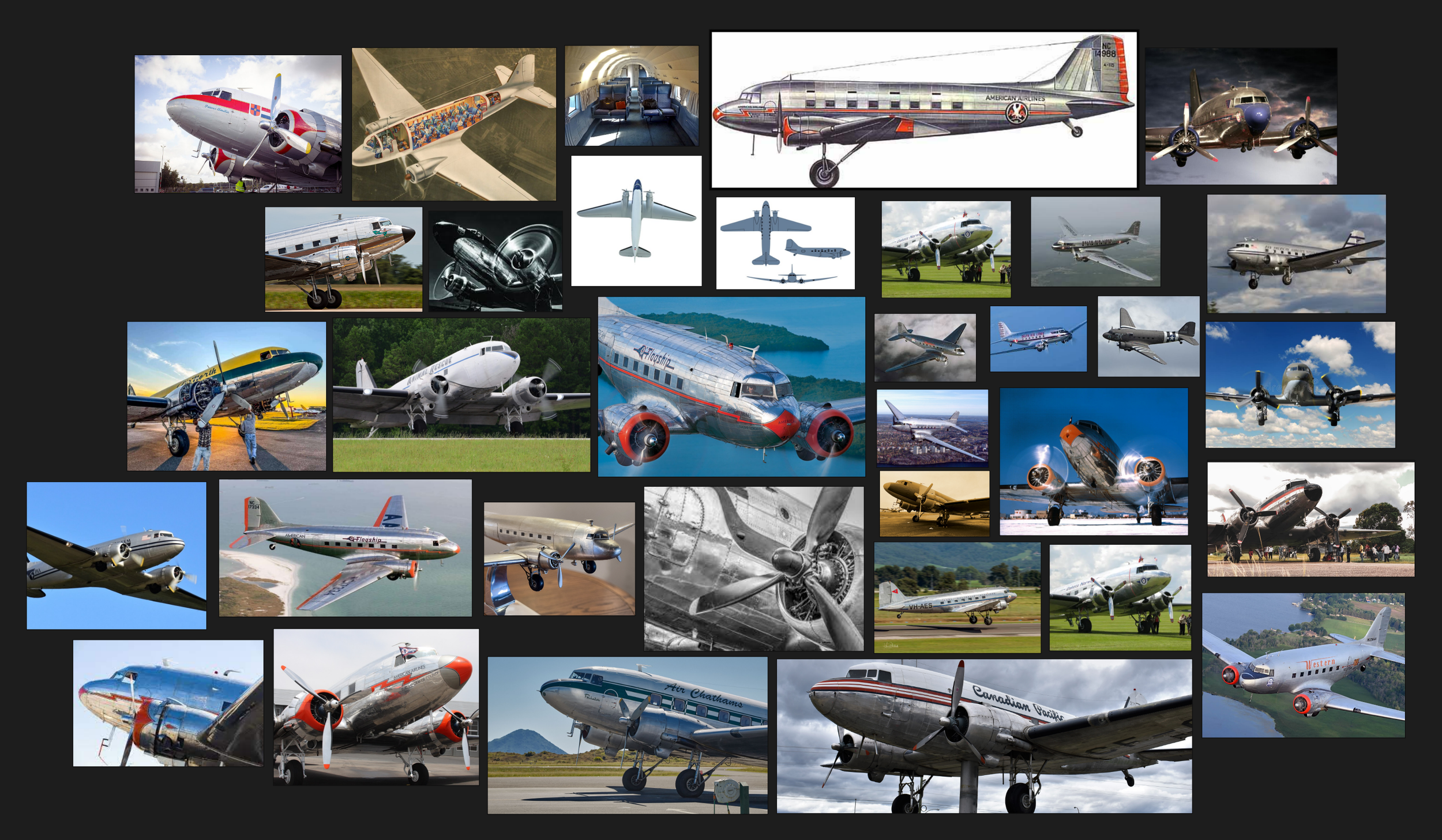
Reference Board
This week I mostly gathering as many references as I could, and I still plan to collect more as I go. I plan to look at these references constantly to ensure my model has the correct look and mostly importantly level of realism.
Modeling
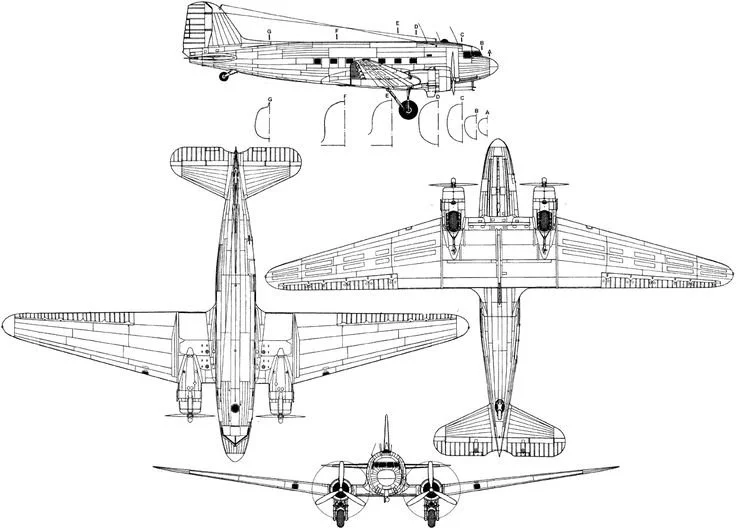
First, I brought this DC-3 blueprint into Photoshop and split it up into 4 different photos.

Then, here you can see how I have set up each orthographic blueprint in its corresponding position.


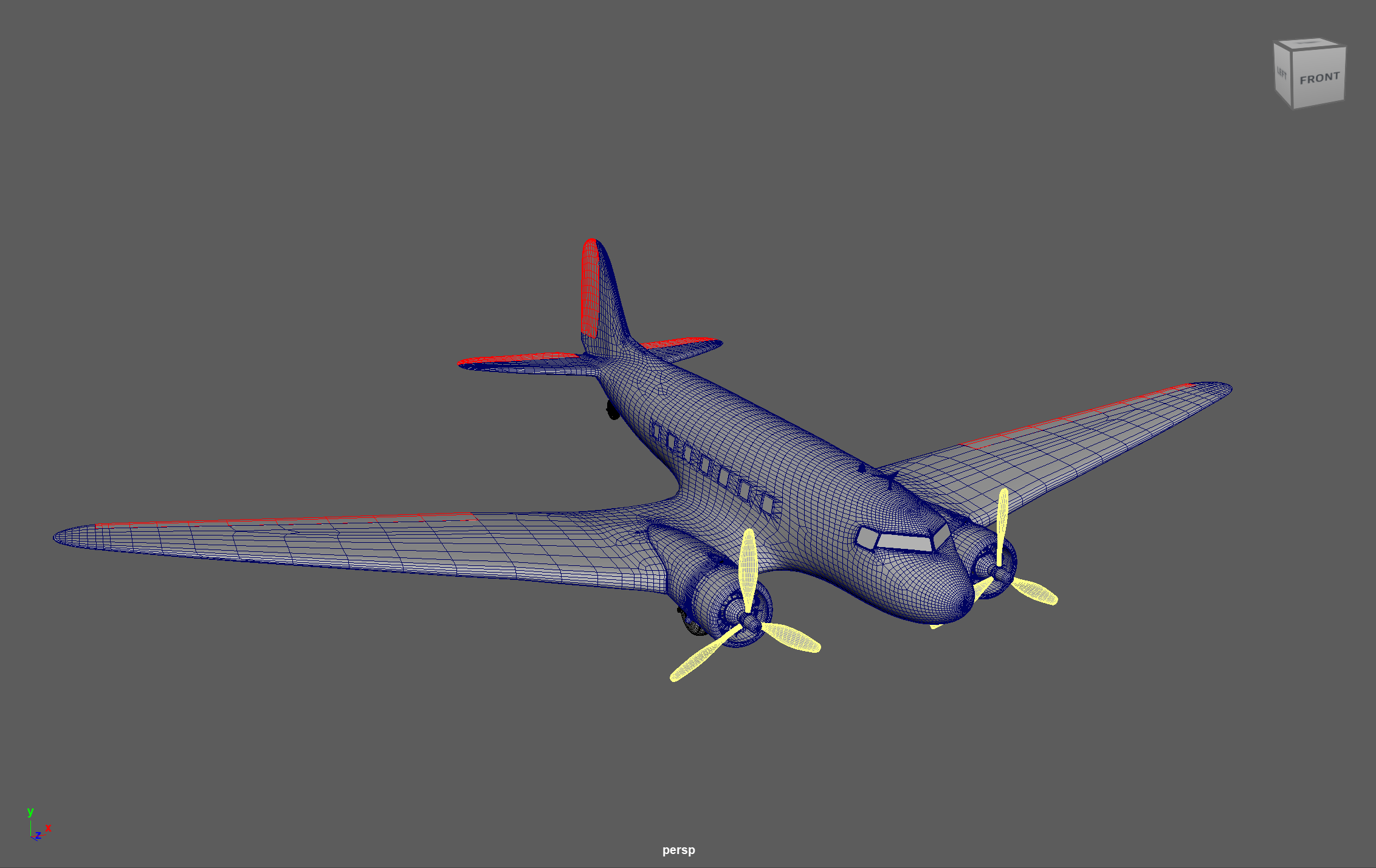
Wireframe Mode
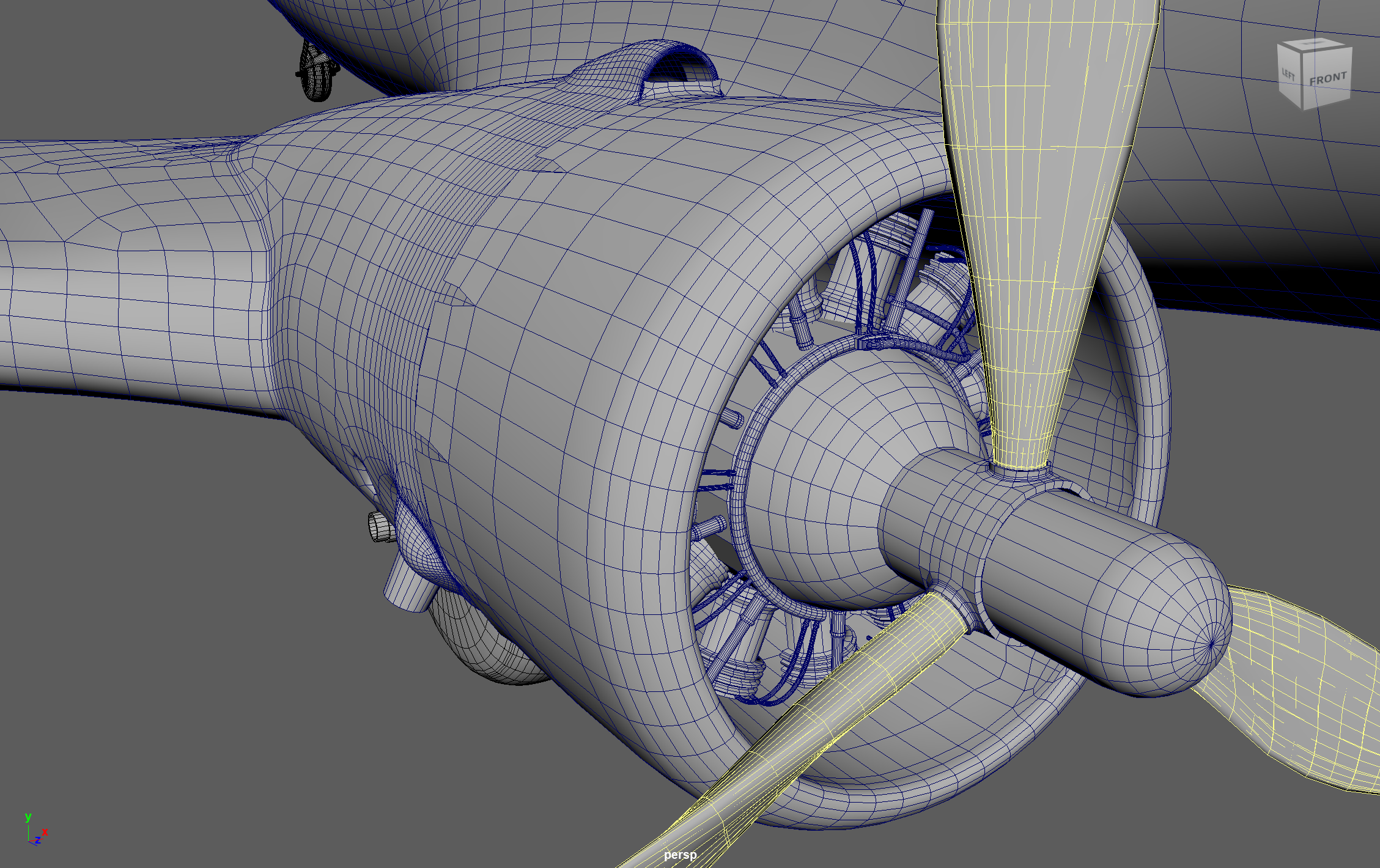
Close Up of Engine Model Details
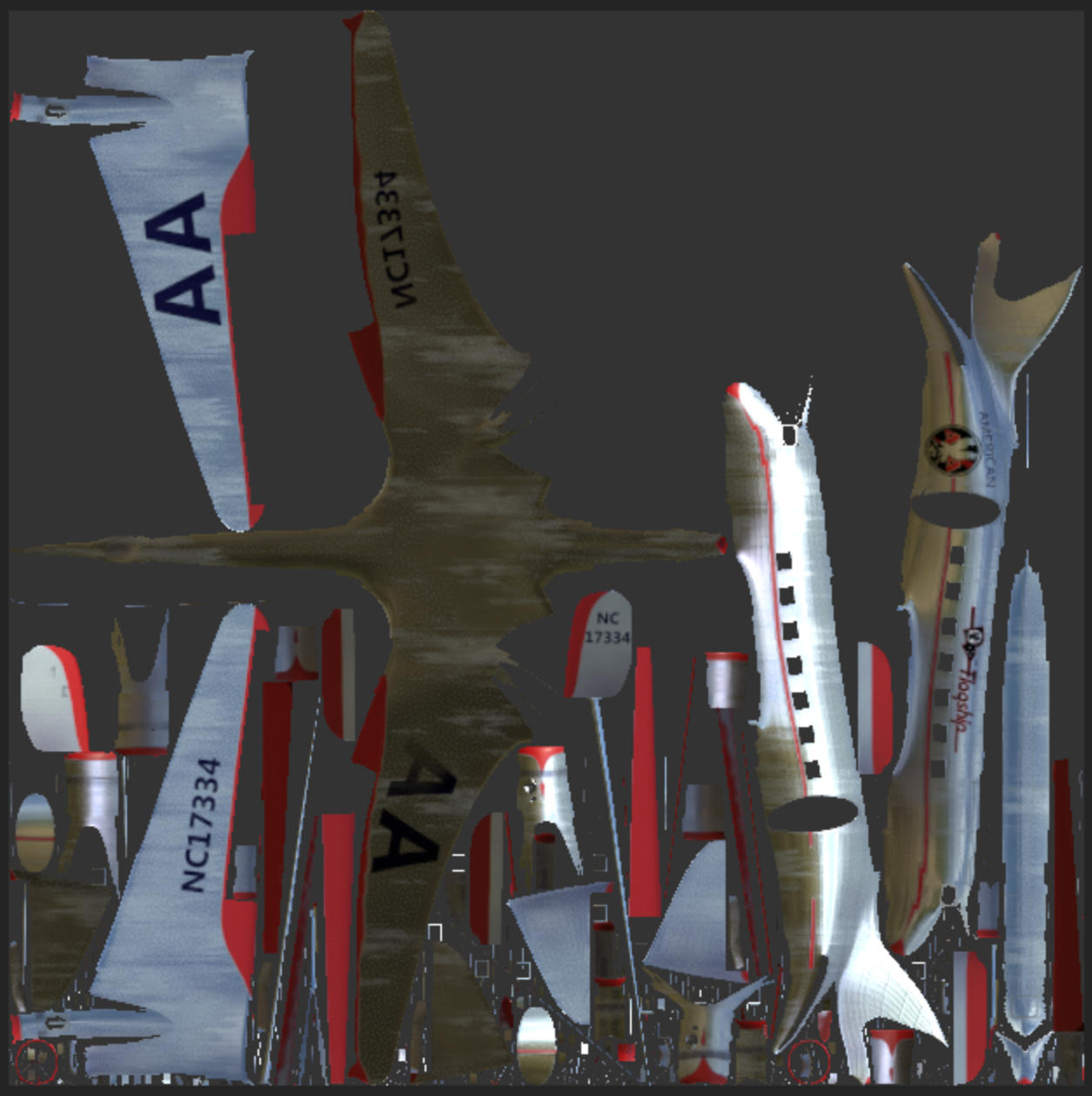
UV Map Material View
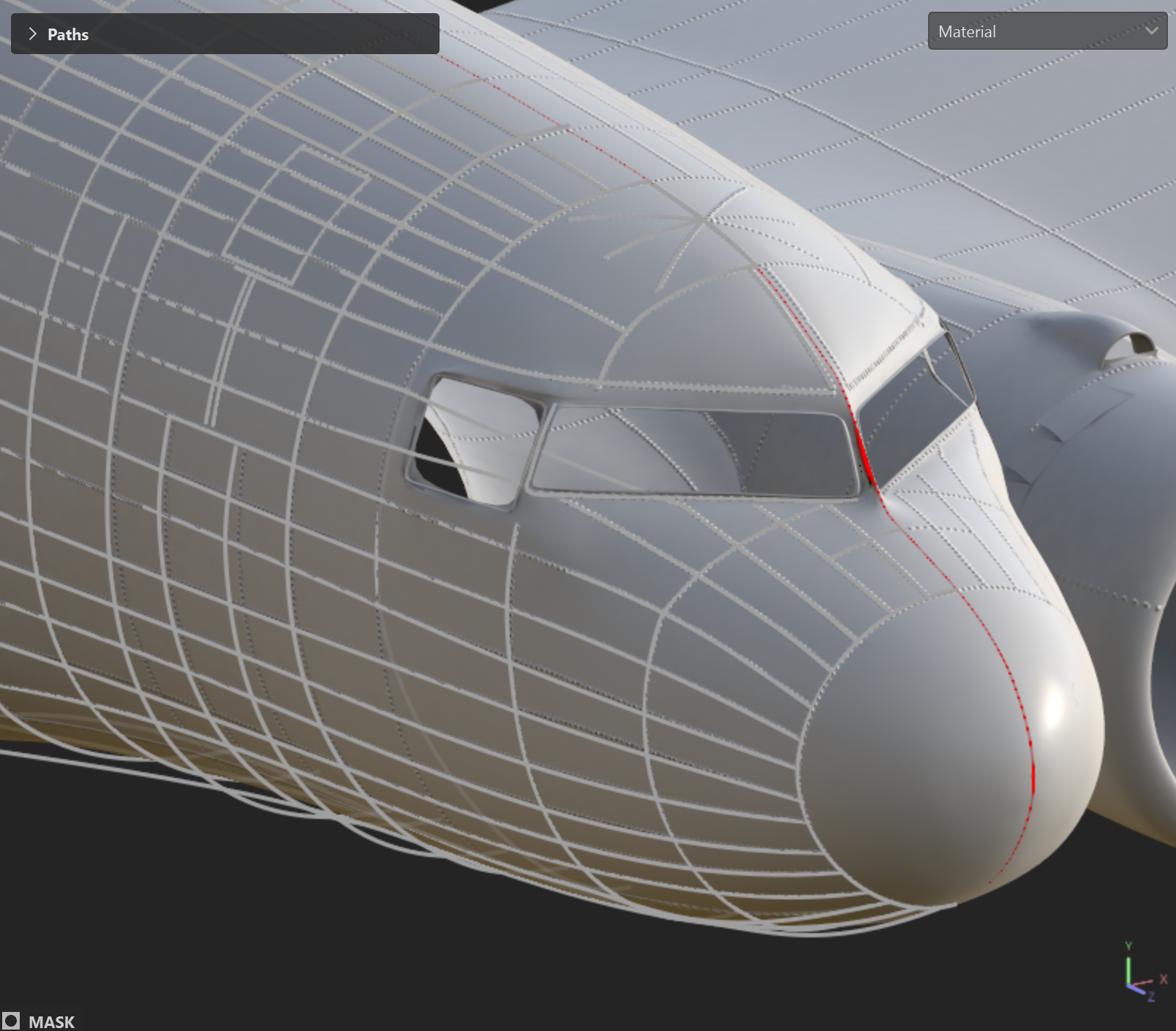
Curves creating bolt lines connecting different “panels”, that are drawn only on one side and then mirrored for perfect symmetry
After many hours of looking at reference and modeling in Maya, I added all the different parts and pieces I could identify to the plane model and added a lot more detail.
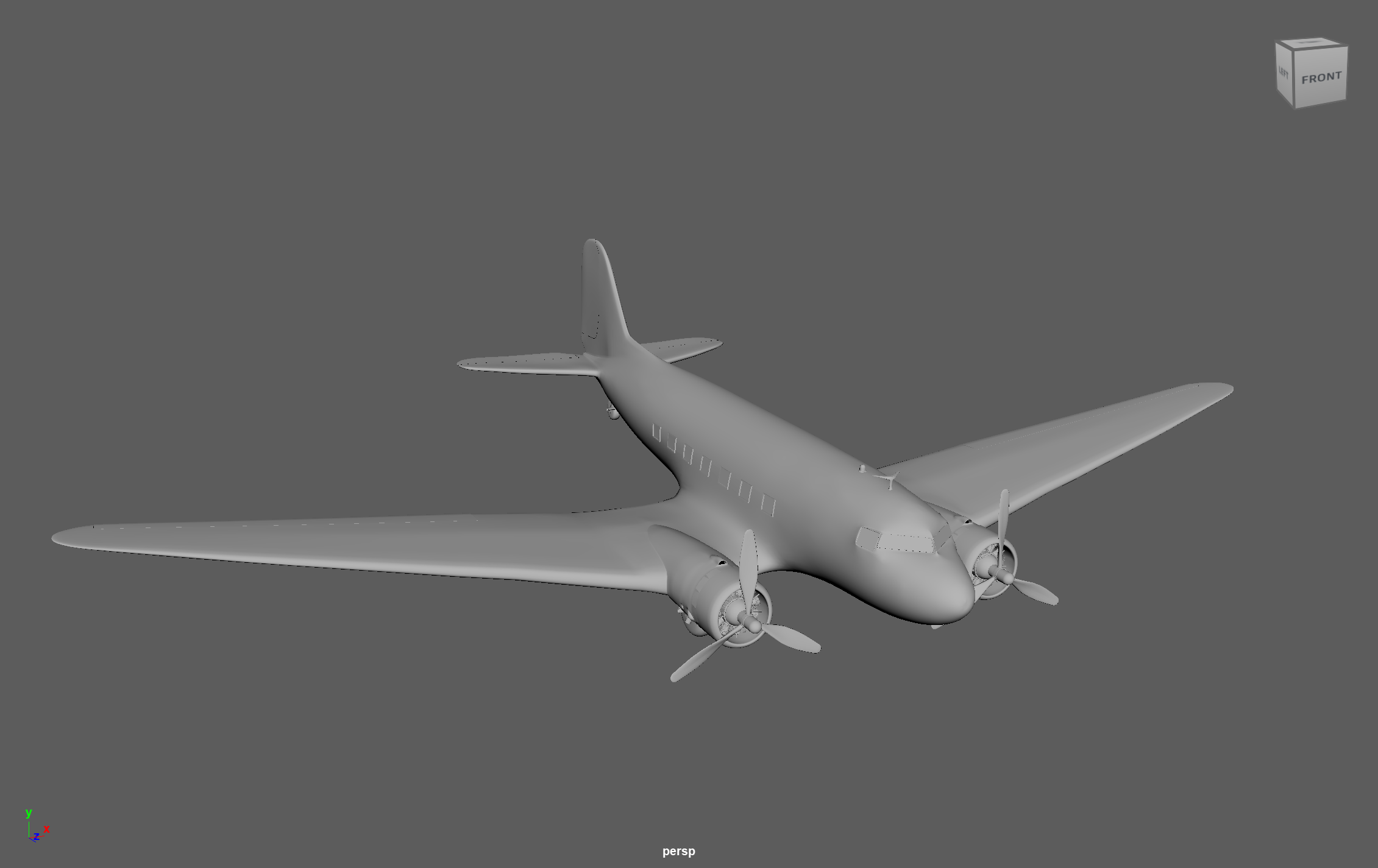
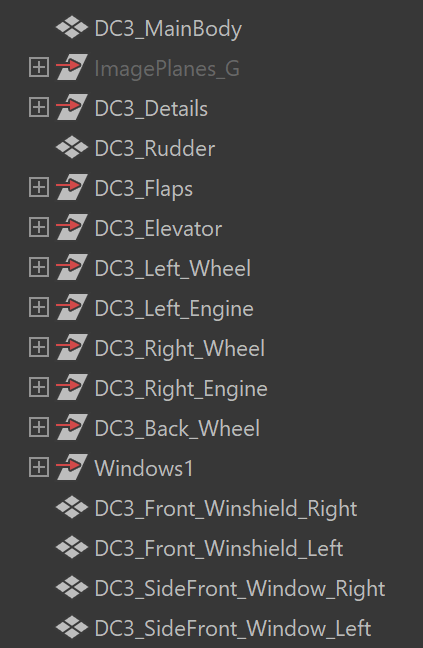
Organized List of Geometry
Smooth Shading Mode
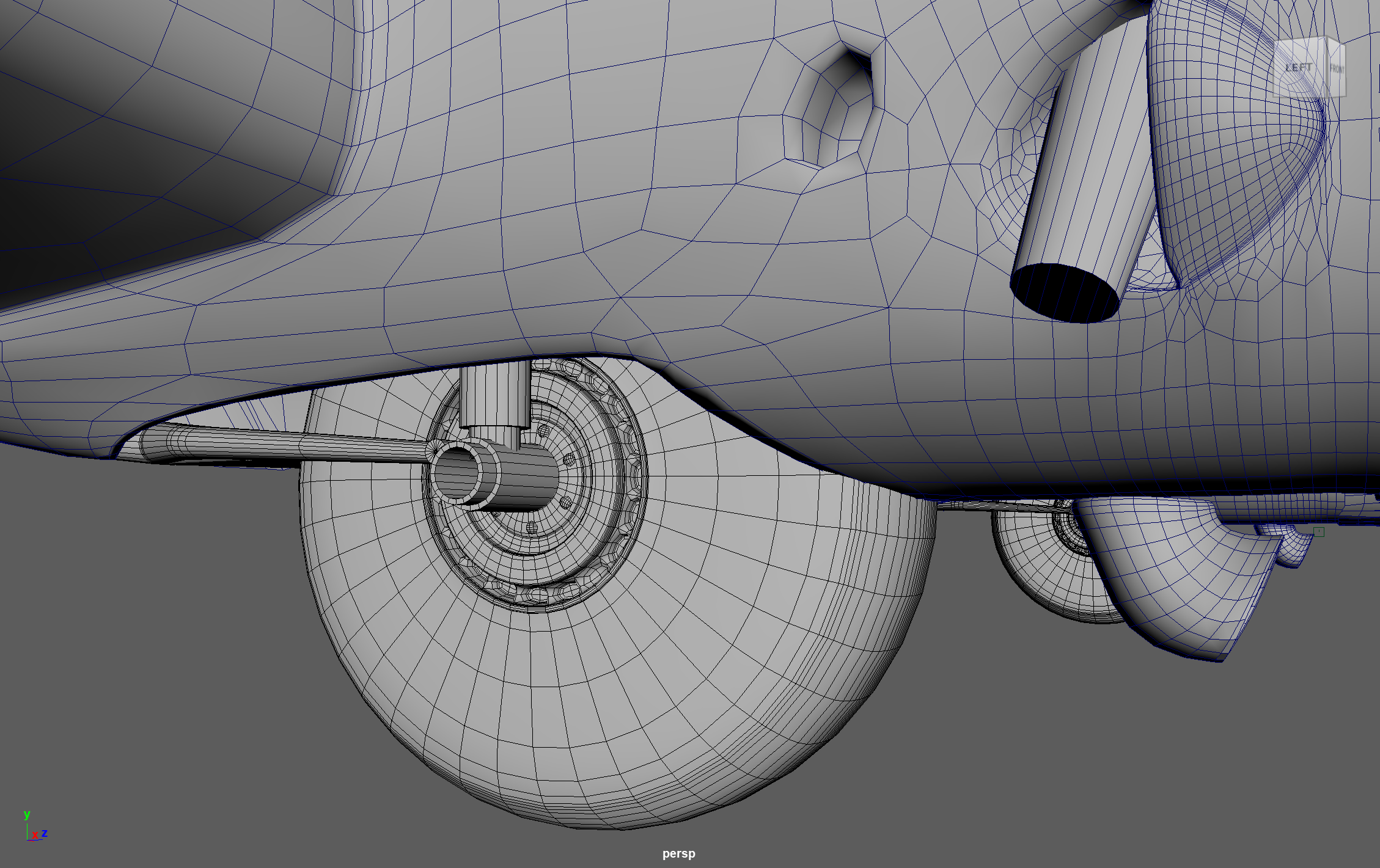
Close Up of Front Wheel Model Details
Texturing
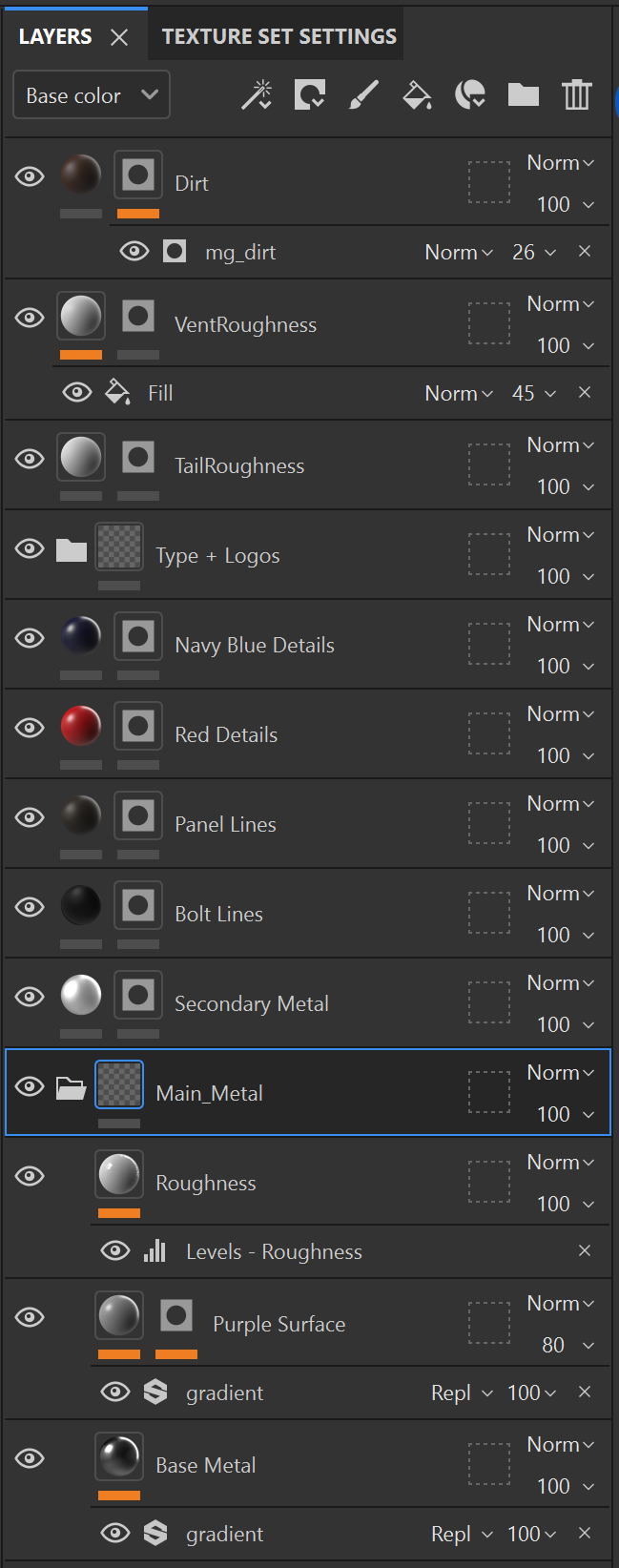
I created the textures for this model using Adobe Substance Painter
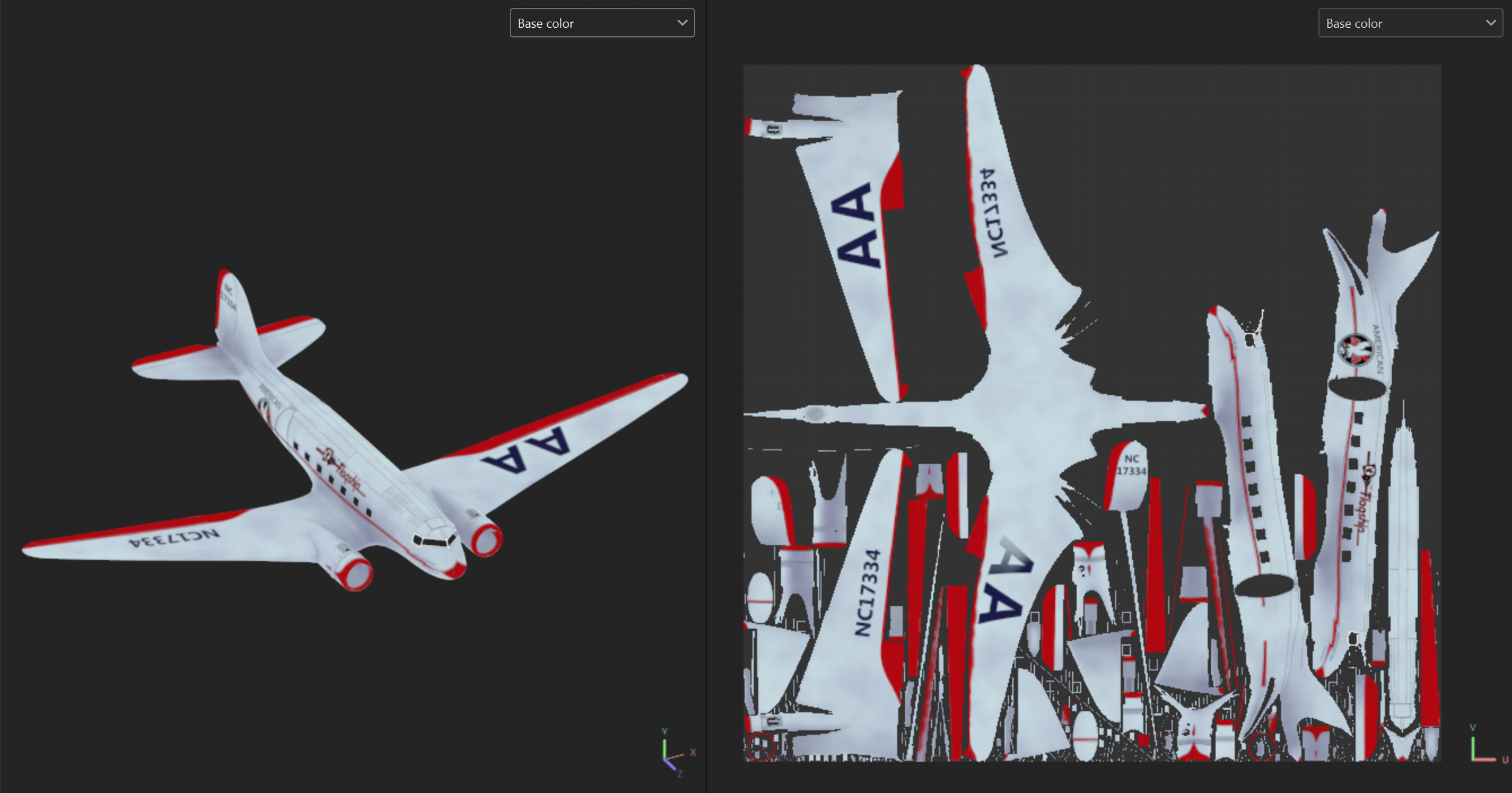
Perspective Material View
Layers
Base Color
Roughness
Metalness
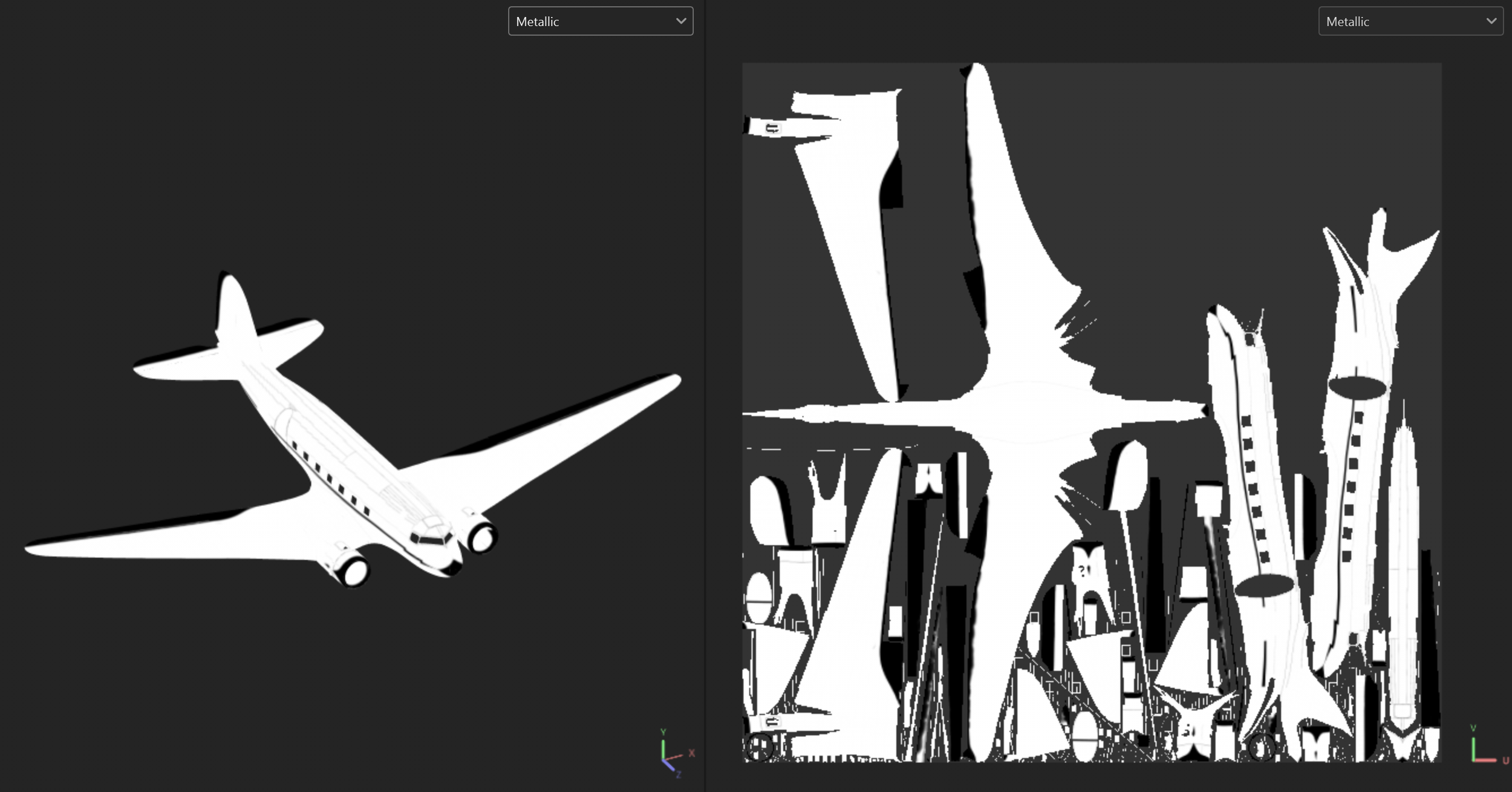
I used the pen tool and curves to create a lot of the smooth lines / shapes needed for these textures. Below you can see different examples of where I used curves.
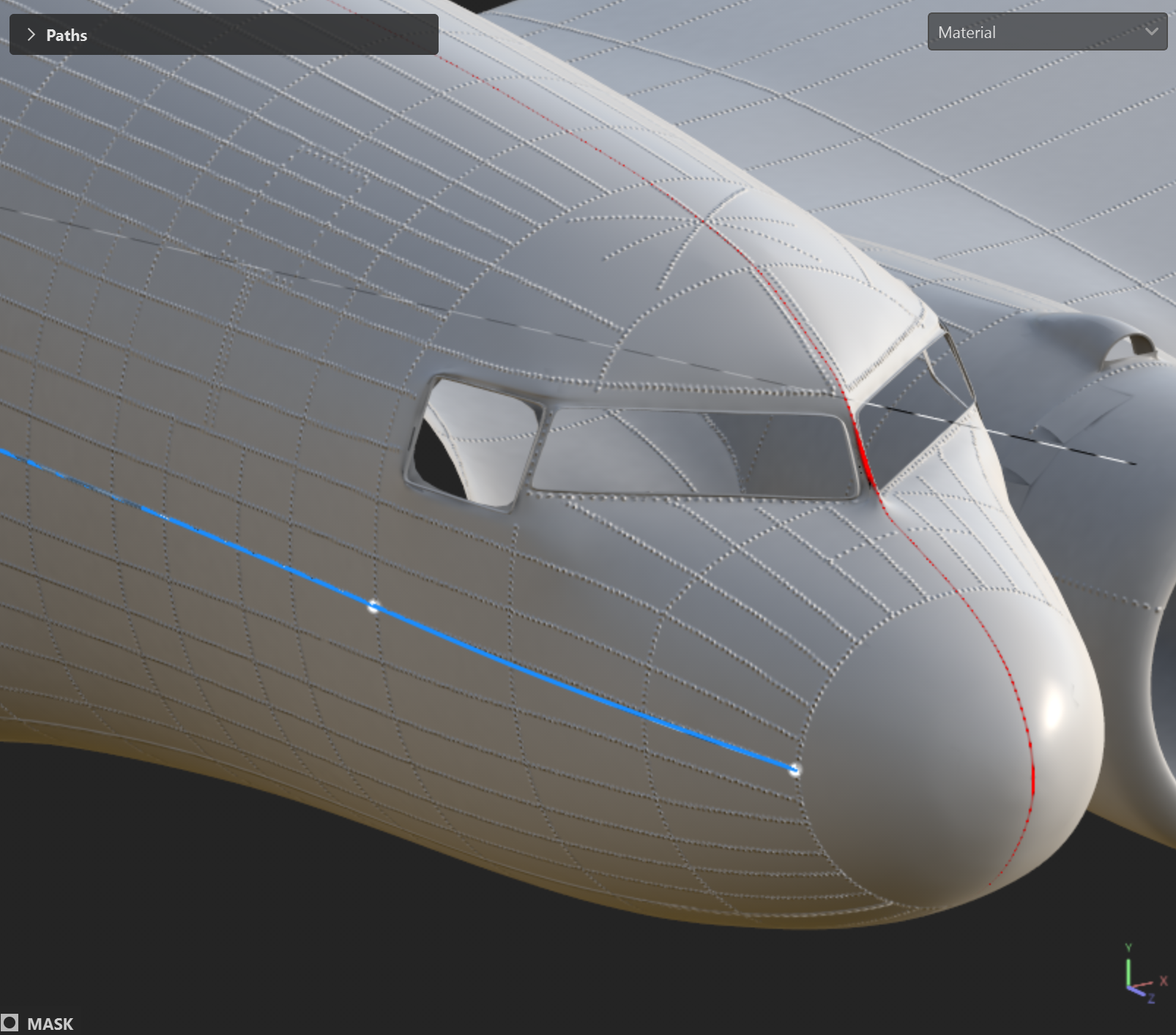
View of points from one individual curve projected onto surface
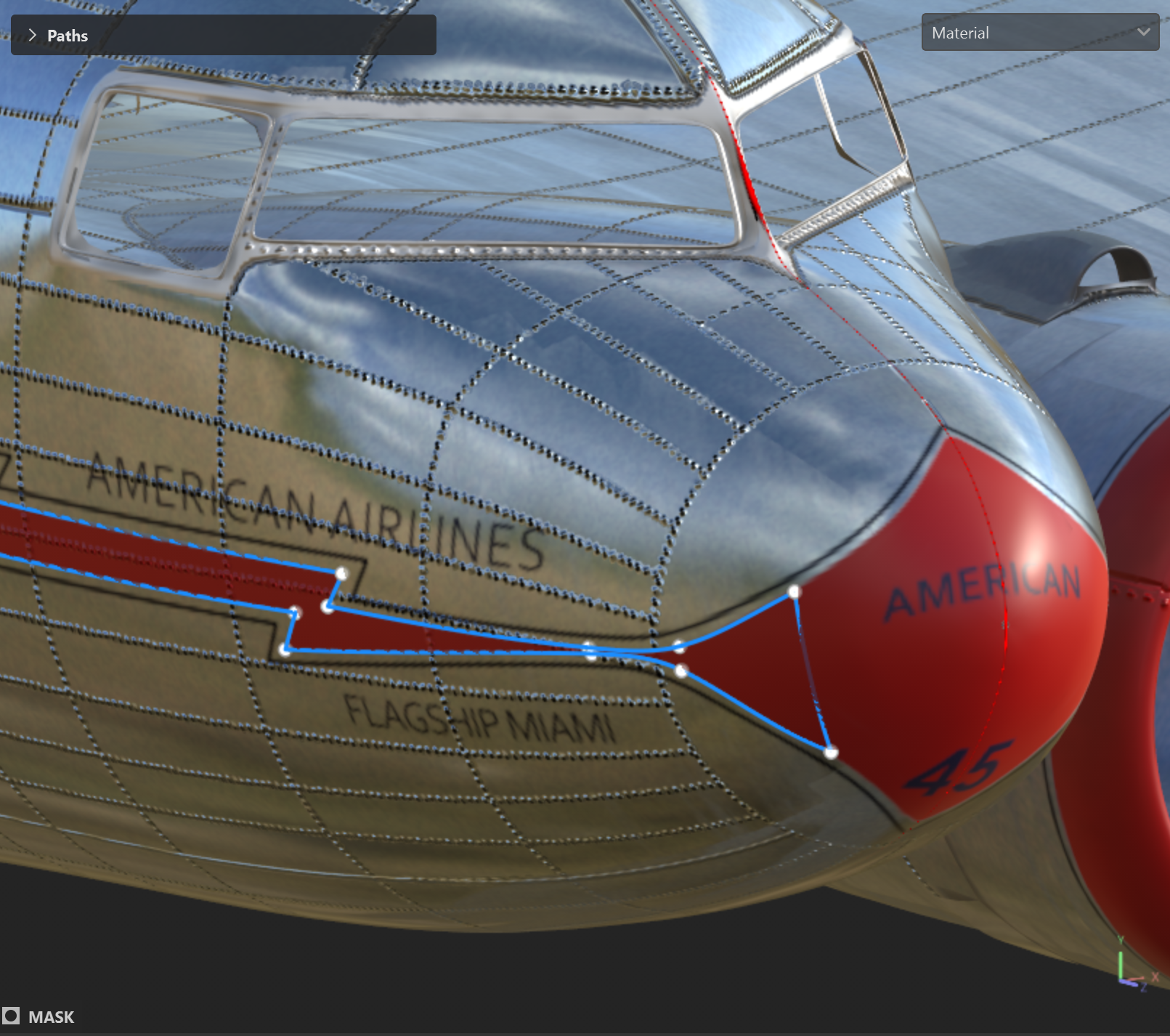
Filled Curve used to create these red paint lines
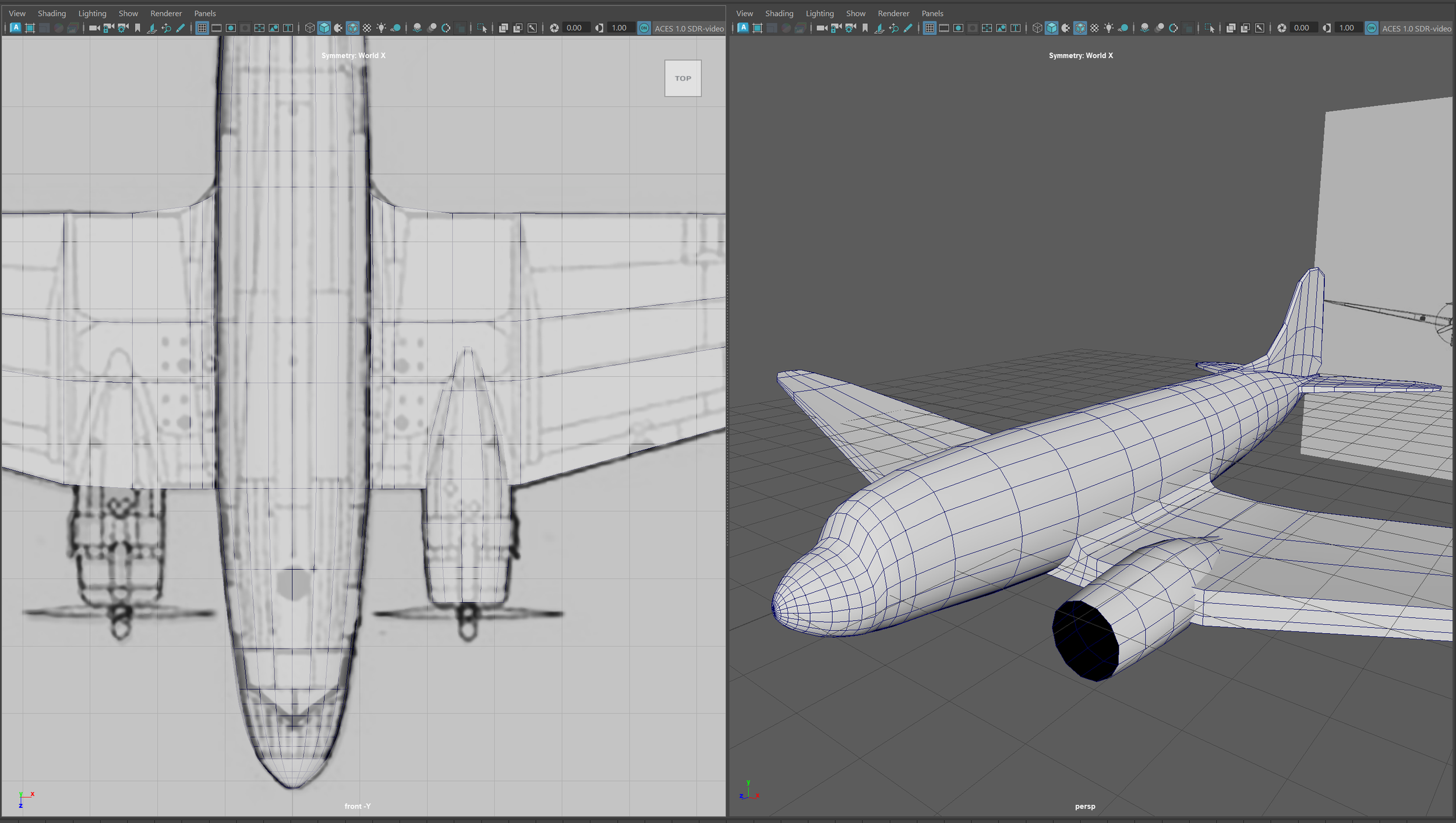
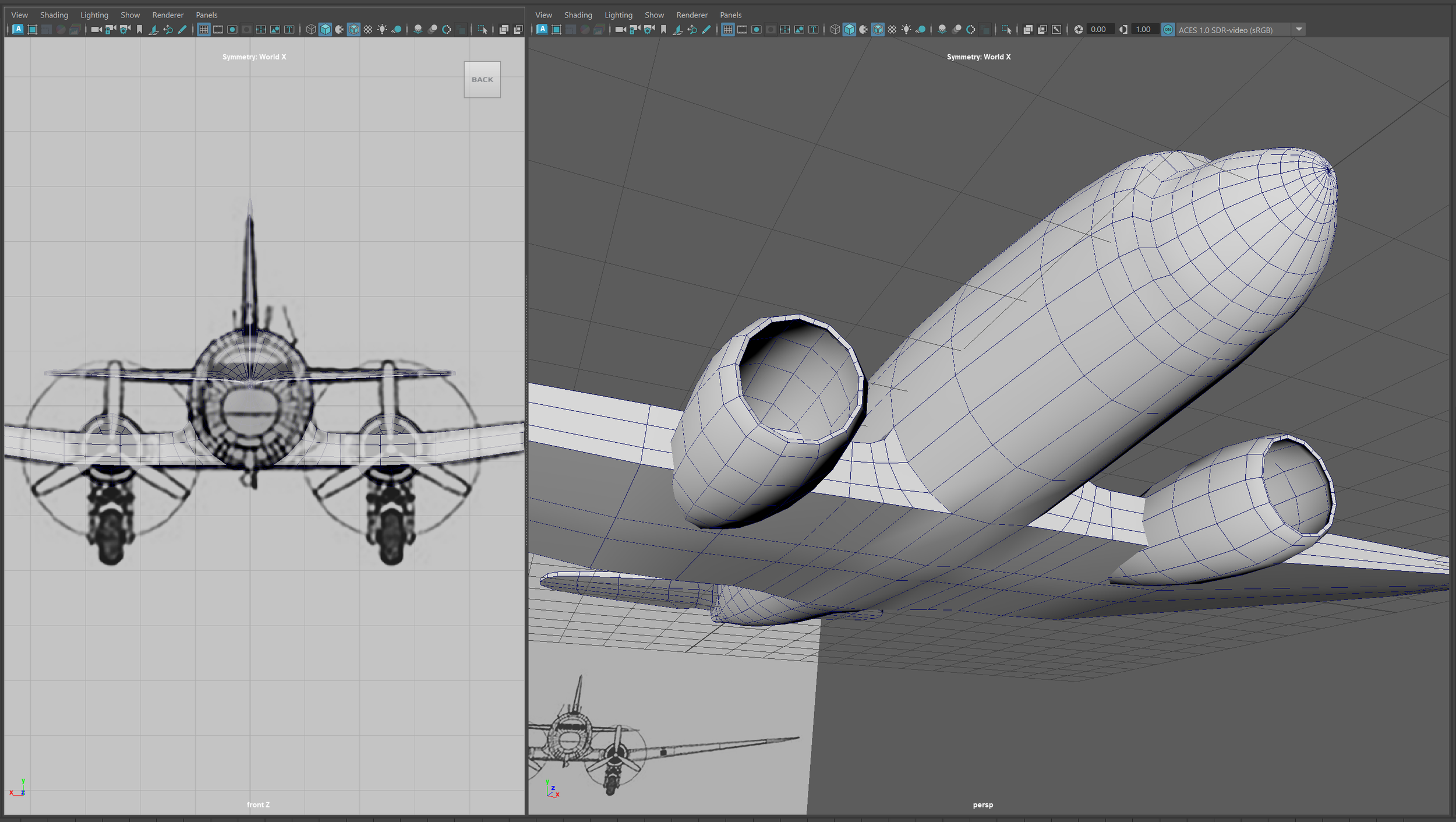
In these screen captures, you can see how this 3D scene setup allows me to start the low-poly model of the plane by directly using the plane’s proportions to help create a more accurate model.
Final Still Render
Render created in Unreal Engine